The Transformative Power of ERP: Unlocking Comprehensive Business Benefits
In today’s dynamic and hyper-competitive business landscape, organizations are constantly seeking ways to optimize operations, enhance efficiency, and gain a decisive edge. The sheer complexity of managing disparate functions—from finance and human resources to manufacturing and supply chain—often leads to silos, inefficiencies, and a lack of real-time visibility. This is where Enterprise Resource Planning (ERP) systems emerge not just as a software solution, but as a strategic imperative for modern enterprises.
An ERP system integrates all facets of an operation, including product planning, development, manufacturing, sales and marketing, in a single database, application, and user interface. Far from being a mere IT tool, ERP acts as the central nervous system of a business, providing a unified platform that connects departments, streamlines processes, and delivers actionable insights. The benefits of implementing such a comprehensive system are profound and far-reaching, touching every aspect of an organization’s performance and paving the way for sustainable growth and innovation.
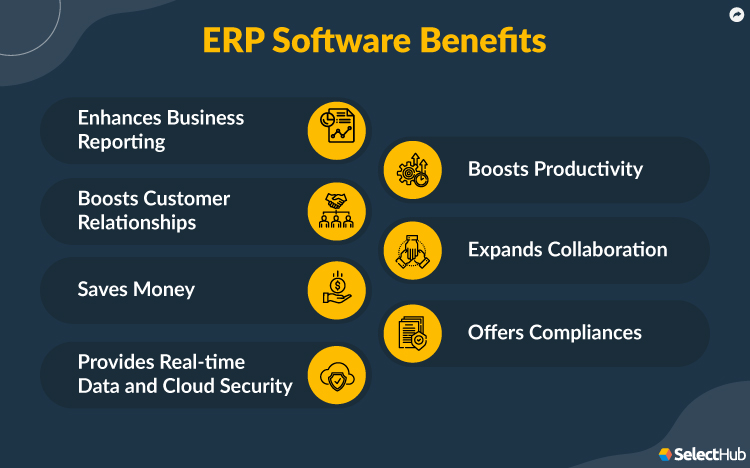
1. Enhanced Operational Efficiency and Productivity
One of the most immediate and tangible benefits of an ERP system is the significant boost in operational efficiency and productivity. By automating repetitive tasks, standardizing workflows, and integrating disparate functions, ERP drastically reduces manual effort and the potential for human error.
- Process Automation: ERP systems automate routine processes like order processing, invoice generation, payroll, inventory management, and data entry. This frees up employees from tedious, time-consuming tasks, allowing them to focus on more strategic, value-added activities that require critical thinking and problem-solving.
- Streamlined Workflows: With a unified system, information flows seamlessly across departments. For instance, a sales order can automatically trigger inventory checks, production scheduling, and shipping logistics, all without manual intervention or data re-entry. This eliminates bottlenecks, accelerates cycle times, and ensures a smoother progression of tasks from inception to completion.
- Reduced Manual Errors: Manual data entry across multiple, disconnected systems is a breeding ground for errors. An ERP system centralizes data entry, ensuring that information is entered once and then propagated throughout the system. This drastically reduces inconsistencies, discrepancies, and the time spent correcting mistakes, leading to higher data accuracy and reliability.
- Optimized Resource Utilization: By providing a clear overview of resources—be it human capital, machinery, or raw materials—ERP helps businesses allocate them more effectively. Production schedules can be optimized to minimize downtime, and labor can be deployed where it’s most needed, leading to better utilization of all available assets.
2. Superior Data Visibility and Informed Decision-Making
Perhaps the most strategic benefit of an ERP system is its ability to provide a "single source of truth" for all business data. This unparalleled data visibility empowers management with the insights needed to make faster, more informed, and ultimately better decisions.
- Centralized Database: All operational data, from sales figures and customer interactions to inventory levels and financial reports, resides in a single, integrated database. This eliminates data silos and ensures that everyone across the organization is working with the same, up-to-date information.
- Real-time Insights: Unlike legacy systems that often rely on batch processing or periodic updates, modern ERP systems offer real-time data. This means that managers can access current performance metrics, inventory levels, sales trends, and financial standings at any given moment. This immediacy is crucial for responding quickly to market changes, production issues, or customer demands.
- Comprehensive Reporting and Analytics: ERP systems come equipped with powerful reporting and analytical tools. Customizable dashboards allow users to visualize key performance indicators (KPIs) relevant to their roles, from daily sales performance to monthly expenditure trends. Advanced analytics capabilities can uncover patterns, forecast future trends, and identify areas for improvement or potential risks, transforming raw data into actionable intelligence.
- Strategic Planning: With a holistic view of the business, leaders can develop more effective long-term strategies. They can identify opportunities for market expansion, optimize product portfolios, and make data-driven decisions about investments and resource allocation, confident that their strategies are grounded in accurate, comprehensive data.
3. Significant Cost Reduction and Optimized Resource Management
While the initial investment in an ERP system can be substantial, the long-term cost savings and efficiency gains often provide a compelling return on investment (ROI).
- Reduced Operational Costs: By streamlining processes and automating tasks, ERP reduces the need for manual labor in certain areas, potentially lowering staffing costs. Furthermore, improved efficiency in areas like inventory management minimizes waste, obsolescence, and storage costs.
- Improved Inventory Control: ERP provides precise, real-time tracking of inventory levels. This allows businesses to maintain optimal stock levels, reducing carrying costs associated with excess inventory while simultaneously preventing stockouts that can lead to lost sales and customer dissatisfaction. Just-in-time (JIT) inventory strategies become more feasible and effective with ERP.
- Better Vendor Management and Procurement: With integrated procurement modules, ERP enables better tracking of supplier performance, pricing, and contract terms. This data empowers businesses to negotiate more favorable deals, consolidate purchases, and identify cost-saving opportunities in their supply chain.
- Consolidated IT Infrastructure: Replacing multiple disparate systems with a single ERP solution can significantly reduce IT infrastructure costs. This includes fewer software licenses, less hardware to maintain, and a simplified IT support structure. Cloud-based ERP (SaaS) solutions further reduce these costs by offloading infrastructure management to the vendor.
4. Enhanced Customer Satisfaction and Relationship Management
In today’s customer-centric world, delivering exceptional customer experience is paramount. ERP plays a critical role in enabling businesses to meet and exceed customer expectations.
- Faster Order Fulfillment: By integrating sales, inventory, and logistics, ERP accelerates the order-to-cash cycle. Orders can be processed more quickly, inventory can be allocated efficiently, and shipments can be tracked in real-time, leading to faster and more reliable delivery times.
- Improved Customer Service: With a 360-degree view of the customer—including purchase history, interactions, and service requests—customer service representatives can provide more personalized and effective support. They can quickly access relevant information, resolve issues efficiently, and anticipate customer needs, enhancing overall satisfaction.
- Accurate Information: Customers appreciate transparency. ERP ensures that sales teams have accurate information on product availability, pricing, and delivery schedules, which can be communicated reliably to customers, building trust and reducing misunderstandings.
- Personalized Marketing and Sales: Integrating ERP with CRM (Customer Relationship Management) functionalities allows businesses to segment customers more effectively, tailor marketing campaigns, and offer personalized product recommendations, leading to higher engagement and sales conversions.
5. Standardization, Compliance, and Risk Management
For businesses operating in regulated industries or across multiple geographies, compliance and risk management are critical. ERP systems provide the framework necessary to meet these stringent requirements.
- Standardized Processes: ERP enforces standardized business processes across all departments and locations. This consistency ensures that operations are performed in a uniform manner, reducing variations and improving quality control.
- Regulatory Compliance: Many ERP systems are designed with built-in functionalities to help businesses comply with industry-specific regulations (e.g., FDA, GAAP, IFRS, GDPR). They facilitate accurate financial reporting, audit trails, and data privacy controls, making it easier to meet compliance obligations and pass audits.
- Enhanced Data Security: Centralizing data within a robust ERP system, especially modern cloud-based solutions, typically offers higher levels of security compared to fragmented legacy systems. Access controls, encryption, and regular backups help protect sensitive business information from unauthorized access and cyber threats.
- Improved Audit Trails: ERP systems automatically record transactions and changes, providing comprehensive audit trails. This transparency is invaluable for internal controls, financial audits, and identifying the source of errors or discrepancies, thereby reducing the risk of fraud and ensuring accountability.
- Disaster Recovery: Modern ERP solutions, particularly cloud-based ones, often include robust disaster recovery capabilities, ensuring business continuity even in the event of system failures or unforeseen disasters.
6. Scalability and Business Growth
As businesses grow, their operational needs evolve and become more complex. ERP systems are designed to be scalable, supporting expansion without requiring a complete overhaul of the IT infrastructure.
- Supports Expansion: Whether a company is expanding into new markets, launching new product lines, acquiring other businesses, or simply experiencing organic growth, an ERP system can accommodate increased transaction volumes and additional users without significant performance degradation.
- Flexible Architecture: Many ERP solutions are modular, allowing businesses to add new functionalities (e.g., advanced analytics, IoT integration, e-commerce platforms) as their needs evolve, rather than being locked into a rigid system.
- Adaptability to New Business Models: ERP can support various business models, from traditional manufacturing and distribution to service-based organizations and e-commerce. Its flexibility allows companies to pivot and adapt to changing market demands or new strategic directions.
- Global Operations: For multinational corporations, ERP provides the capability to manage operations across different countries, currencies, languages, and legal requirements within a single system, simplifying global management and reporting.
7. Enhanced Collaboration and Communication
Breaking down departmental silos is crucial for organizational synergy. ERP fosters a culture of collaboration and improves communication by providing a shared platform for information.
- Shared Information Platform: All departments have access to the same, consistent data. Sales teams can see inventory levels, production teams can view order backlogs, and finance can track all transactions in real-time. This transparency reduces misunderstandings and improves coordination.
- Cross-Functional Teamwork: With integrated processes, cross-functional teams can work more effectively together. For example, a new product development team can collaborate with manufacturing, procurement, and marketing all within the ERP environment, ensuring alignment from conception to launch.
- Improved Internal Communication: By standardizing data and providing clear workflows, ERP reduces the need for constant email exchanges or phone calls to get updates or clarify information, leading to more efficient internal communication.
8. Competitive Advantage and Innovation
Ultimately, all the aforementioned benefits converge to give businesses a significant competitive advantage and foster an environment ripe for innovation.
- Agility and Responsiveness: With real-time data and streamlined processes, businesses can react much faster to market changes, competitor actions, or new opportunities. This agility allows them to stay ahead of the curve.
- Data-Driven Innovation: By analyzing vast amounts of data, businesses can identify trends, customer preferences, and inefficiencies, which can directly inform product development, service improvements, and new business strategies.
- Focus on Core Competencies: By automating routine tasks and optimizing operations, ERP frees up human capital to focus on strategic initiatives, research and development, and innovation that truly differentiates the business in the marketplace.
- Digital Transformation Enabler: ERP is often the backbone of an organization’s digital transformation journey, enabling integration with emerging technologies like Artificial Intelligence (AI), Machine Learning (ML), Internet of Things (IoT), and Blockchain, further enhancing capabilities and opening new avenues for growth.
Navigating the ERP Journey: Considerations for Success
While the benefits are compelling, it’s crucial to acknowledge that ERP implementation is a complex undertaking. Success hinges on careful planning, robust execution, and effective change management. Key considerations include:
- Strategic Alignment: The chosen ERP system must align perfectly with the organization’s strategic goals and unique business processes.
- Vendor Selection: Partnering with a reputable ERP vendor that offers industry-specific solutions and strong support is vital.
- Customization vs. Standardization: Striking the right balance between customizing the ERP to fit specific needs and adhering to standard best practices to avoid over-complication.
- Data Migration: Meticulous planning for migrating historical data from old systems to the new ERP is essential for data integrity.
- User Training and Adoption: Comprehensive training and strong change management strategies are critical to ensure user acceptance and maximize the system’s potential.
- Ongoing Support and Optimization: ERP is not a one-time project; continuous support, updates, and optimization are necessary to maintain its effectiveness and derive long-term value.
Conclusion
In an era defined by rapid technological advancement and relentless global competition, Enterprise Resource Planning systems are no longer a luxury but a fundamental requirement for businesses aiming for efficiency, growth, and resilience. By integrating core business functions, providing real-time data visibility, streamlining operations, and fostering a culture of informed decision-making, ERP empowers organizations to unlock their full potential. The transformative power of ERP extends beyond mere software installation; it represents a strategic investment in the future, enabling businesses to navigate complexity, adapt to change, and achieve sustainable competitive advantage in the ever-evolving global marketplace. For any enterprise serious about optimizing performance and securing its future, embracing the benefits of a well-implemented ERP system is an undeniable imperative.