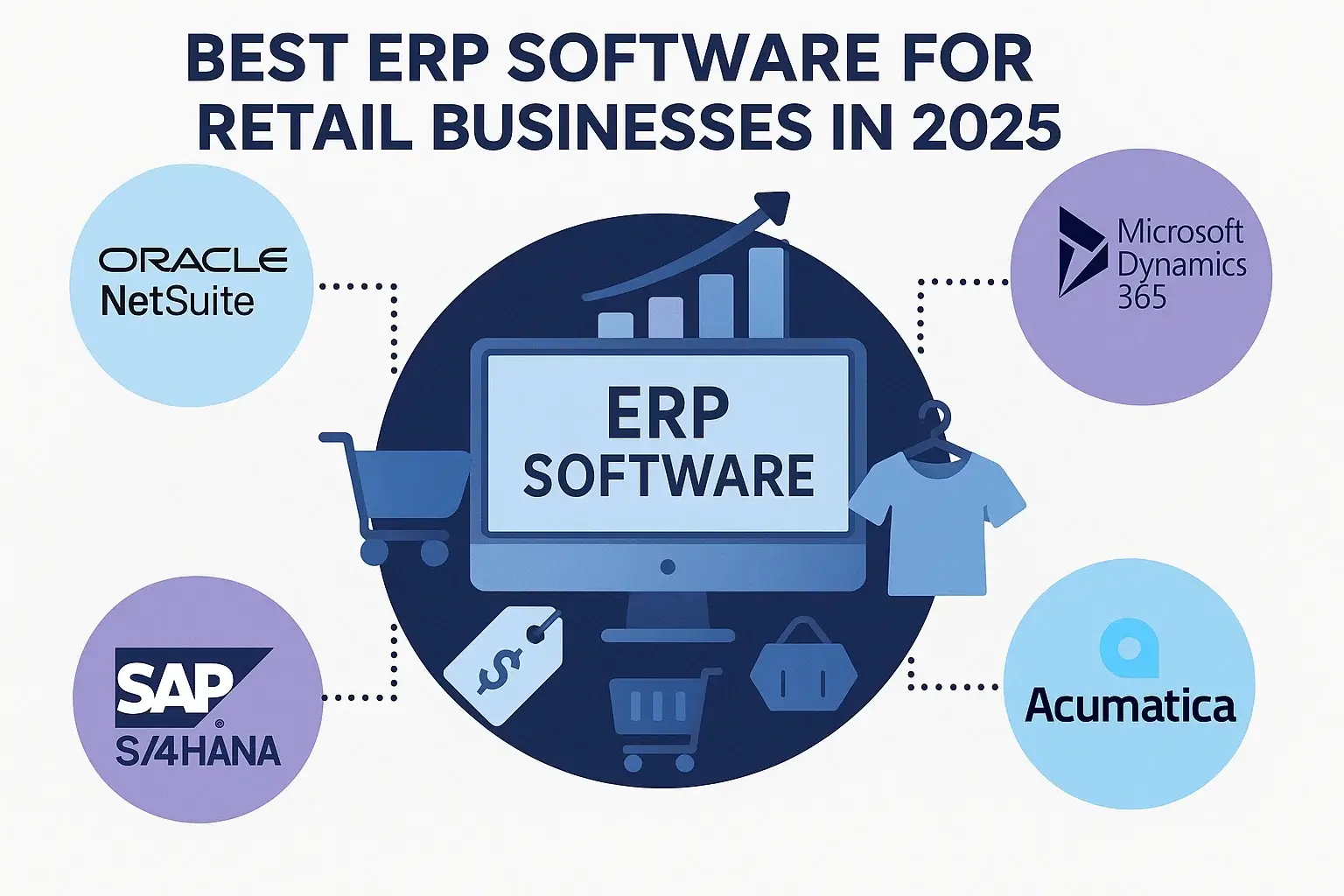
Unlocking Omnichannel Excellence: A Comprehensive Guide to ERP Solutions for Retail Businesses
The retail landscape is in a constant state of flux, driven by evolving consumer expectations, technological advancements, and intense competition. From the rise of e-commerce to the demand for seamless omnichannel experiences, retailers today face unprecedented complexities. In this dynamic environment, merely selling products is no relic of the past; it’s about delivering personalized experiences, optimizing every operational facet, and leveraging data for strategic advantage. This is where Enterprise Resource Planning (ERP) solutions emerge not just as an option, but as a critical necessity for retail businesses aiming to thrive.
This article delves deep into the world of ERP solutions for retail, exploring their fundamental role, the modules that drive efficiency, the tangible benefits they offer, crucial considerations for implementation, and the future trends shaping their evolution.
The Evolving Retail Landscape and Its Challenges
Before diving into ERP, it’s essential to understand the multifaceted challenges confronting modern retailers:
- Omnichannel Imperative: Customers expect a consistent and seamless experience across all touchpoints – physical stores, websites, mobile apps, social media, and marketplaces. This demands integrated inventory, pricing, and customer data.
- Intense Competition: Retailers compete not just with local stores but with global e-commerce giants, necessitating agility, unique value propositions, and operational excellence.
- Supply Chain Complexities: Managing inventory across multiple locations, dealing with global suppliers, forecasting demand accurately, and ensuring timely fulfillment are monumental tasks.
- Rising Customer Expectations: Consumers demand personalization, faster delivery, easy returns, and proactive customer service, pushing retailers to enhance their responsiveness.
- Data Overload and Disparate Systems: Many retailers operate with fragmented systems for POS, inventory, e-commerce, and accounting, leading to data silos, inefficiencies, and a lack of a unified view.
- Operational Inefficiencies: Manual processes, redundant data entry, and poor communication between departments lead to errors, wasted resources, and increased operational costs.
- Seasonality and Trends: The retail industry is highly susceptible to seasonal fluctuations, fast-changing trends, and unforeseen disruptions, requiring flexible and responsive systems.
These challenges highlight the need for a robust, integrated system that can centralize information, automate processes, and provide real-time insights – precisely what an ERP system is designed to do.
What is ERP and Why is it Critical for Retail?
At its core, an Enterprise Resource Planning (ERP) system is a comprehensive software solution that integrates all facets of an enterprise’s operations into a single, unified database. Instead of having separate systems for finance, inventory, sales, and HR, an ERP system brings them all together.
For retail businesses, ERP acts as the central nervous system, providing a single source of truth for all critical business data. It breaks down departmental silos, allowing for seamless information flow and collaboration. This integration is paramount because, in retail, every department’s function is intrinsically linked to others. A sale in-store affects inventory, which affects procurement, which affects financials, and ultimately, customer satisfaction. Without integration, managing these interdependencies becomes a nightmare.
The shift from traditional, fragmented systems to an integrated ERP offers:
- Real-time Visibility: Gain instant insights into inventory levels, sales performance, customer data, and financial health.
- Process Automation: Automate routine tasks, reducing manual errors and freeing up staff for more strategic activities.
- Data Consistency: Eliminate data duplication and inconsistencies, ensuring that everyone works with accurate, up-to-date information.
- Enhanced Collaboration: Foster better communication and collaboration across departments, leading to more efficient operations.
Key ERP Modules and Their Benefits for Retail
A modern ERP system designed for retail typically comprises several integrated modules, each addressing a specific business function. When combined, they provide a holistic view and control over the entire retail operation:
-
Inventory Management:
- Functionality: Tracks inventory levels across all stores, warehouses, and online channels in real-time. Manages stock movements, returns, and inter-store transfers. Supports batch and serial number tracking.
- Retail Benefit: Prevents stockouts and overstocking, optimizes inventory turnover, reduces carrying costs, and improves order fulfillment accuracy. Enables accurate demand forecasting and helps manage seasonal inventory fluctuations.
-
Supply Chain Management (SCM):
- Functionality: Manages the entire supply chain, from supplier relationship management (SRM) and procurement to logistics, warehousing, and distribution. Automates purchase orders and tracks shipments.
- Retail Benefit: Enhances supplier collaboration, optimizes procurement processes, reduces lead times, and ensures efficient movement of goods. Crucial for managing complex global supply chains and ensuring products are on shelves when needed.
-
Point of Sale (POS) Integration:
- Functionality: Seamlessly integrates with the POS system, capturing sales data, processing transactions, managing returns, and handling various payment methods (cash, card, mobile, gift cards).
- Retail Benefit: Provides a unified view of sales data across all channels, updates inventory in real-time with every sale, and streamlines the checkout process for a better customer experience. Facilitates accurate daily reconciliation and sales reporting.
-
Customer Relationship Management (CRM):
- Functionality: Stores comprehensive customer profiles, purchase history, preferences, and interaction logs. Manages loyalty programs, marketing campaigns, and customer service interactions.
- Retail Benefit: Enables personalized marketing and promotions, enhances customer service by providing agents with full customer context, boosts customer loyalty, and drives repeat business. It’s the engine for understanding and engaging with your customer base.
-
Financial Management:
- Functionality: Includes General Ledger (GL), Accounts Payable (AP), Accounts Receivable (AR), budgeting, financial reporting, and multi-currency support. Automates invoicing, reconciliations, and expense tracking.
- Retail Benefit: Provides a unified view of all financial transactions, enabling accurate tracking of sales, expenses, profits, and cash flow in real-time. Ensures compliance with financial regulations, simplifies tax reporting, and supports strategic financial planning for multi-store operations.
-
E-commerce Integration:
- Functionality: Connects the ERP system directly with online stores and marketplaces. Synchronizes product information, inventory levels, orders, and customer data between physical and digital channels.
- Retail Benefit: Crucial for omnichannel success. Ensures consistent product availability and pricing online and offline, automates online order fulfillment, and provides a unified customer view regardless of the shopping channel.
-
Business Intelligence (BI) & Analytics:
- Functionality: Gathers data from all modules, processes it, and presents it through dashboards, reports, and predictive analytics tools. Identifies trends, patterns, and key performance indicators (KPIs).
- Retail Benefit: Empowers data-driven decision-making. Retailers can analyze sales trends, customer behavior, product performance, operational efficiency, and profitability to optimize strategies, identify opportunities, and mitigate risks.
-
Merchandising and Assortment Planning:
- Functionality: Assists with product lifecycle management, category management, pricing strategies, promotions, and markdown optimization. Helps plan product assortments based on historical data and market trends.
- Retail Benefit: Ensures the right products are available at the right price, at the right time. Maximizes profitability through intelligent pricing and promotional strategies, minimizes dead stock, and aligns product offerings with customer demand.
-
Human Resources Management (HRM):
- Functionality: Manages employee data, payroll, benefits, time and attendance, scheduling, and performance management.
- Retail Benefit: Streamlines HR processes, ensures accurate payroll, helps with staff scheduling across multiple stores, and provides tools for employee development and retention – critical for managing a dynamic retail workforce.
Tangible Benefits of ERP for Retail Businesses
Implementing an ERP solution offers a myriad of benefits that directly impact a retail business’s bottom line and competitive standing:
- Enhanced Operational Efficiency: By automating routine tasks and streamlining workflows, ERP reduces manual effort, minimizes errors, and speeds up operations across inventory management, order processing, and financial reporting.
- Improved Customer Experience: A unified view of customer data, purchase history, and preferences enables personalized interactions, targeted marketing, efficient returns processing, and seamless omnichannel journeys, leading to higher customer satisfaction and loyalty.
- Optimized Inventory & Reduced Costs: Real-time inventory visibility and advanced forecasting capabilities lead to optimized stock levels, reduced carrying costs, minimized stockouts and overstock, and fewer write-offs due to obsolescence.
- Better Decision-Making: With comprehensive, real-time data and powerful analytics tools, retailers can make informed decisions regarding product assortment, pricing, promotions, staffing, and expansion strategies.
- Scalability and Future-Proofing: A robust ERP system is designed to scale with business growth, easily accommodating new stores, product lines, or sales channels without requiring a complete overhaul of IT infrastructure.
- Reduced Manual Errors and Data Duplication: Centralized data management eliminates the need for redundant data entry, significantly reducing errors and ensuring data integrity across all departments.
- Compliance and Security: ERP systems help retailers adhere to financial regulations, data privacy laws (like GDPR), and industry-specific standards, while also offering robust security features to protect sensitive business and customer data.
- Competitive Advantage: Retailers with integrated ERP systems can react faster to market changes, offer superior customer experiences, and operate more profitably than their competitors relying on fragmented, outdated systems.
Key Considerations When Implementing an ERP Solution for Retail
While the benefits are compelling, a successful ERP implementation requires careful planning and strategic decision-making:
- Define Clear Requirements: Before looking at solutions, thoroughly assess your current pain points, future goals, and specific retail needs (e.g., multi-store, e-commerce, specific product categories).
- Choose the Right Vendor: Select an ERP vendor with a proven track record in the retail sector. Look for solutions specifically designed for retail, rather than generic ERPs, as they often come with built-in retail-specific functionalities.
- Cloud vs. On-Premise:
- Cloud ERP: Offers lower upfront costs, scalability, automatic updates, and accessibility from anywhere. Ideal for agility and businesses without extensive IT resources.
- On-Premise ERP: Provides greater control over data and customization but requires significant upfront investment and in-house IT expertise.
The trend in retail is overwhelmingly towards cloud-based solutions.
- Customization vs. Standard Features: While some customization may be necessary, prioritize solutions that meet most of your needs out-of-the-box. Excessive customization can increase costs, complexity, and future upgrade challenges.
- Data Migration Strategy: Plan meticulously for migrating historical data from old systems to the new ERP. This is often one of the most challenging aspects of implementation.
- Training and Change Management: Employee adoption is crucial. Invest in comprehensive training programs and robust change management strategies to ensure staff are comfortable and proficient with the new system.
- Phased Implementation: For large or complex retail operations, consider a phased approach, rolling out modules incrementally to minimize disruption and allow for adjustments.
- Post-Implementation Support: Ensure the vendor provides adequate support, maintenance, and regular updates to keep the system running optimally and secure.
The Future of ERP in Retail
The evolution of ERP in retail is closely tied to broader technological advancements:
- Artificial Intelligence (AI) and Machine Learning (ML): Expect deeper integration of AI for predictive analytics (demand forecasting, personalized recommendations), automated customer service (chatbots), and dynamic pricing.
- Internet of Things (IoT): IoT devices in stores (smart shelves, sensors) will feed real-time data into ERPs, enhancing inventory accuracy, store operations, and customer insights.
- Blockchain for Supply Chain Transparency: Blockchain could offer unprecedented transparency and traceability in the retail supply chain, ensuring ethical sourcing and authenticity.
- Headless Commerce Integration: ERPs will increasingly integrate with headless commerce architectures, allowing retailers greater flexibility in designing front-end customer experiences while the ERP handles the back-end operations.
- Enhanced Customer Experience Focus: ERPs will continue to evolve to provide more granular customer insights and tools for hyper-personalization across every touchpoint, further blurring the lines between online and offline retail.
Conclusion
In today’s hyper-competitive and customer-centric retail environment, an ERP solution is no longer a luxury but a strategic imperative. By integrating disparate systems, automating critical processes, and providing real-time data insights, ERP empowers retailers to overcome operational challenges, enhance customer experiences, optimize inventory, and make data-driven decisions. The journey to omnichannel excellence and sustainable growth in retail is inextricably linked to the intelligent adoption and effective utilization of a robust ERP system. For retailers ready to embrace the future, ERP is the cornerstone of agility, efficiency, and unparalleled customer satisfaction.