ERP vs. CRM: Demystifying the Core Differences for Business Success
In today’s fast-paced digital economy, businesses are constantly seeking ways to optimize operations, enhance customer satisfaction, and drive sustainable growth. To achieve these goals, organizations often turn to sophisticated software systems designed to manage various aspects of their enterprise. Among the most pivotal of these are Enterprise Resource Planning (ERP) and Customer Relationship Management (CRM) systems. While both are critical for modern businesses, they serve distinct purposes, focus on different aspects of an organization, and manage different types of data. Yet, they are frequently confused, or their unique contributions are not fully understood.
This article aims to demystify the core differences between ERP and CRM, delving into their definitions, primary functions, key features, benefits, and how they ultimately complement each other to form a powerful, integrated business ecosystem. By the end, you’ll have a clear understanding of when and why each system is indispensable.
Understanding the Landscape: A Brief Overview
Before diving into the specifics, let’s establish a foundational understanding. Imagine a business as a complex organism. An ERP system acts like the central nervous system, coordinating all internal organs and functions to ensure the body operates efficiently. A CRM system, on the other hand, is like the external sensory organs and communication system, focused on interacting with the external environment – primarily customers – to ensure their needs are met and relationships are nurtured.
While both are enterprise-level software solutions that leverage data to improve decision-making and operational efficiency, their scope and focus diverge significantly.
What is Enterprise Resource Planning (ERP)?
Definition: Enterprise Resource Planning (ERP) is a comprehensive suite of integrated software applications that an organization uses to manage its day-to-day business activities, such as accounting, procurement, project management, risk management, compliance, and supply chain operations. An ERP system integrates all facets of an operation, including product planning, development, manufacturing, sales, and marketing, in a single database, application, and user interface.
Core Purpose: The primary goal of an ERP system is to centralize and streamline a company’s internal operations, providing a holistic, real-time view of its entire business. It aims to improve efficiency, reduce costs, enhance data accuracy, and facilitate better decision-making by eliminating data silos and automating core business processes.
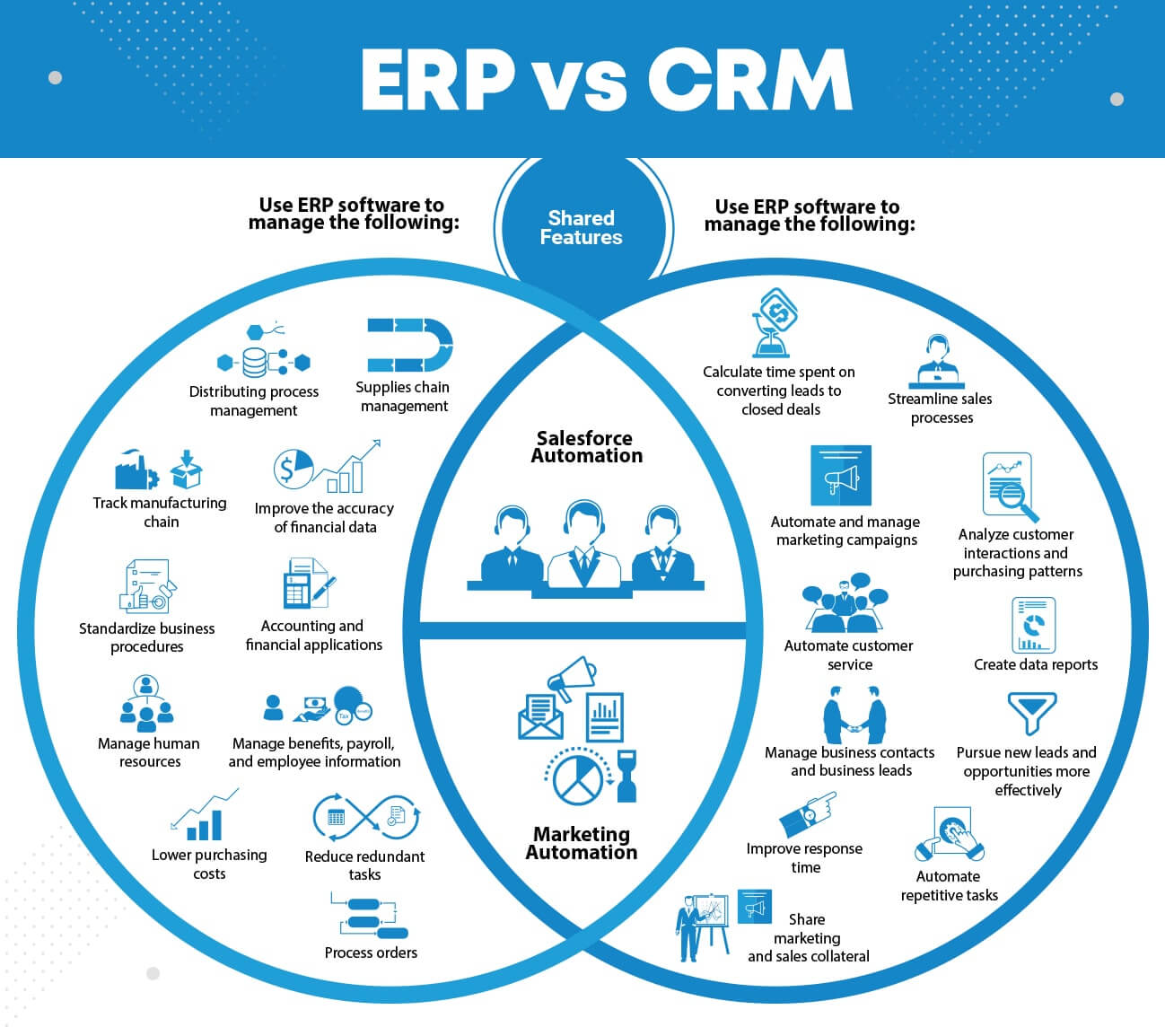
Key Modules and Functions: ERP systems are modular, allowing businesses to implement the components most relevant to their needs. Common modules include:
- Financial Management: This is often the backbone of an ERP system, handling general ledger, accounts payable, accounts receivable, budgeting, financial reporting, asset management, and payroll. It provides a comprehensive view of the company’s financial health.
- Human Resources (HR) Management: Manages employee data, recruitment, onboarding, performance reviews, time and attendance, benefits administration, and compensation.
- Supply Chain Management (SCM): Oversees the entire supply chain, from sourcing raw materials to delivering finished products. This includes inventory management, warehousing, logistics, order fulfillment, and supplier management.
- Manufacturing: Essential for production-centric businesses, this module handles production planning, scheduling, quality control, bill of materials (BOM), and material requirements planning (MRP).
- Procurement (Purchasing): Manages the process of acquiring goods and services, including purchase requisitions, purchase orders, vendor management, and contract management.
- Project Management: Helps plan, execute, and track projects, including resource allocation, task management, and budget tracking.
- Inventory Management: Tracks stock levels, manages warehouses, optimizes inventory placement, and monitors goods movement.
- Reporting and Analytics: Provides tools for generating reports, dashboards, and performing data analysis across all integrated modules, offering insights into operational performance.
Who Uses ERP? ERP systems are used by virtually every department within an organization: finance, HR, operations, manufacturing, supply chain, procurement, and even sales management (for order processing and inventory checks). It’s an internal-facing system designed to make the company itself run more smoothly.
Benefits of ERP:
- Improved Efficiency: Automates routine tasks, reducing manual effort and errors.
- Centralized Data: Provides a single source of truth, eliminating data duplication and inconsistencies.
- Cost Reduction: Optimizes resource utilization, reduces waste, and streamlines processes.
- Better Decision-Making: Real-time data and comprehensive reports enable informed strategic choices.
- Enhanced Collaboration: Breaks down departmental silos by providing shared access to information.
- Scalability: Can adapt to a company’s growth and evolving business needs.
- Compliance: Helps meet regulatory requirements and industry standards through robust financial tracking and reporting.
What is Customer Relationship Management (CRM)?
Definition: Customer Relationship Management (CRM) is a technology for managing all your company’s relationships and interactions with customers and potential customers. The goal is simple: improve business relationships to grow your business. A CRM system helps companies stay connected to customers, streamline processes, improve profitability, and enhance customer satisfaction.
Core Purpose: The primary goal of a CRM system is to enhance customer relationships and improve all customer-facing aspects of a business. It focuses on managing leads, sales, marketing campaigns, and customer service interactions to drive customer acquisition, retention, and loyalty.
Key Modules and Functions: CRM systems are designed with customer interaction at their core. Common modules include:
- Sales Force Automation (SFA): Manages the entire sales cycle, from lead generation and qualification to opportunity management, quoting, order processing, and sales forecasting. It helps sales teams track progress, manage pipelines, and automate repetitive tasks.
- Marketing Automation: Facilitates the planning, execution, and measurement of marketing campaigns. This includes email marketing, social media marketing, lead nurturing, campaign analytics, and segmentation of customer data.
- Customer Service and Support: Manages customer inquiries, issues, and complaints. Features include ticketing systems, knowledge bases, live chat, call center integration, and self-service portals to improve response times and resolution rates.
- Lead Management: Captures, tracks, and qualifies leads from various sources, guiding them through the sales funnel until they become customers.
- Contact Management: Stores and organizes detailed information about customers and prospects, including contact details, interaction history, preferences, and purchase history.
- Analytics and Reporting: Provides insights into sales performance, marketing campaign effectiveness, customer satisfaction metrics, and overall customer behavior, enabling data-driven strategies.
- Integration with Communication Channels: Connects with email, phone systems, social media, and chat applications to provide a unified view of customer interactions.
Who Uses CRM? CRM systems are primarily used by customer-facing departments: sales, marketing, and customer service. It empowers these teams to better understand, engage with, and serve customers, ultimately driving revenue and building lasting relationships.
Benefits of CRM:
- Improved Customer Satisfaction: Better understanding of customer needs leads to personalized service and quicker issue resolution.
- Increased Sales and Revenue: Streamlined sales processes, effective lead management, and targeted marketing campaigns drive higher conversion rates.
- Enhanced Customer Retention: Nurturing relationships and proactive engagement reduce churn and foster loyalty.
- Better Marketing Effectiveness: Data-driven insights enable more personalized and effective marketing campaigns.
- Streamlined Communication: Centralized customer data ensures consistent messaging and interaction across all touchpoints.
- Optimized Sales Performance: Sales teams can prioritize leads, track opportunities, and forecast sales more accurately.
- Deeper Customer Insights: Comprehensive data helps identify trends, preferences, and opportunities for upselling or cross-selling.
The Core Differences: ERP vs. CRM Explained
While both systems are vital for business growth, their fundamental distinctions lie in their primary focus, scope, users, and objectives.
| Feature | Enterprise Resource Planning (ERP) | Customer Relationship Management (CRM) |
|---|---|---|
| Primary Focus | Internal Operations: Optimizing back-office processes and resources. | External Interactions: Managing customer relationships and front-office activities. |
| Scope of Data | Financials, HR, supply chain, manufacturing, inventory, procurement, project data. | Customer data, leads, sales opportunities, marketing campaigns, service tickets, communication history. |
| Key Users | Finance, HR, Operations, Manufacturing, Supply Chain, Procurement, Management. | Sales, Marketing, Customer Service, Support. |
| Main Objective | Improve operational efficiency, reduce costs, streamline processes, ensure compliance, provide a holistic view of the business. | Enhance customer satisfaction, increase sales, improve customer retention, optimize marketing efforts, build stronger relationships. |
| Data Flow | Primarily internal; data from various departments flows into a central database for internal analysis and action. | Primarily external-facing; collects data from customer interactions and uses it to inform customer-centric strategies. |
| Business Areas | Back-office functions: accounting, manufacturing, inventory, supply chain, HR. | Front-office functions: sales, marketing, customer service. |
| Impact on Revenue | Indirect impact through cost reduction, efficiency gains, and improved resource management. | Direct impact through increased sales, improved customer retention, and effective marketing. |
| Typical Metrics | Production costs, inventory turnover, lead times, gross profit, operational efficiency, HR metrics. | Sales conversion rates, customer acquisition cost, customer lifetime value, churn rate, customer satisfaction scores. |
| Implementation | Typically more complex, longer, and higher upfront cost due to integration with core operational processes. | Generally less complex and quicker to implement, focusing on specific customer-facing workflows. |
In essence:
- ERP is about the "how": How do we make our products? How do we manage our money? How do we run our factories? It ensures the internal machinery of the business is running smoothly and efficiently.
- CRM is about the "who" and "what": Who are our customers? What do they want? How do we get more of them? How do we keep them happy? It ensures the business is effectively engaging with its market.
The Synergy: How ERP and CRM Complement Each Other
While distinct, ERP and CRM systems are not mutually exclusive; in fact, they are often more powerful when integrated. A truly successful business ecosystem frequently involves the seamless flow of information between these two critical platforms.
Benefits of Integration:
-
Enhanced Customer Experience:
- Sales: A salesperson using CRM can check inventory levels (from ERP) in real-time before promising delivery dates. They can also access customer order history (from ERP) to identify upselling or cross-selling opportunities.
- Customer Service: A service agent (using CRM) can view a customer’s payment history, order status, and shipping information (from ERP) to provide more accurate and helpful support, resolving issues faster.
-
Streamlined Order-to-Cash Process:
- When a sale is made in CRM, the order details can automatically flow into ERP for invoicing, inventory deduction, and fulfillment. This eliminates manual data entry, reduces errors, and speeds up the entire sales and delivery cycle.
-
Accurate Financial Forecasting:
- ERP’s financial data combined with CRM’s sales forecasts and pipeline information provides a more accurate picture for financial planning and budgeting.
-
Improved Inventory Management:
- Sales data from CRM (e.g., upcoming large orders, seasonal demand) can inform ERP’s inventory and production planning, preventing stockouts or overstocking.
-
Better Marketing Segmentation:
- ERP data on customer profitability, purchase frequency, and product preferences can enrich CRM’s customer profiles, allowing for more targeted and effective marketing campaigns.
-
Holistic Business Intelligence:
- Integrating both systems provides a 360-degree view of the business – from internal operational costs and efficiencies (ERP) to external customer behavior and revenue generation (CRM). This allows for deeper analytics and more strategic decision-making.
Without integration, a common scenario might involve a sales team in CRM promising a delivery date that operations (in ERP) cannot meet due to inventory shortages, leading to customer dissatisfaction. Conversely, the finance department in ERP might not have real-time visibility into incoming sales orders, impacting cash flow predictions.
When to Implement Which?
The decision to implement an ERP or CRM system, or both, often depends on a company’s immediate pain points, strategic goals, and current stage of growth.
- Start with CRM if: Your primary challenges revolve around customer acquisition, lead management, sales process inefficiencies, or customer service issues. If your business struggles with inconsistent customer data, missed sales opportunities, or poor customer retention, CRM is likely the priority.
- Start with ERP if: Your internal operations are chaotic, costs are spiraling, inventory management is a nightmare, financial reporting is difficult, or you lack a centralized view of your business’s core functions. If you need to streamline processes, improve efficiency, and gain better control over your resources, ERP is the initial focus.
- Ultimately, aim for both (and integrate them): For most growing businesses, a comprehensive strategy will involve both ERP and CRM. The question isn’t usually "which one," but "which one first" and "how to integrate them effectively." Many vendors now offer integrated suites or provide robust APIs for seamless data exchange.
Challenges and Considerations
Implementing either an ERP or CRM system is a significant undertaking. Key challenges include:
- Cost: Both systems require substantial investment in software licenses, implementation services, training, and ongoing maintenance.
- Complexity: ERP systems, in particular, can be incredibly complex to implement due to the sheer number of modules and integrations required across an entire enterprise.
- Data Migration: Moving existing data from legacy systems to new platforms can be time-consuming and prone to errors.
- User Adoption: Resistance to change and lack of proper training can hinder user adoption, undermining the system’s potential benefits.
- Vendor Selection: Choosing the right vendor and solution that aligns with specific business needs and budget is crucial.
- Integration Challenges: Even with modern APIs, integrating disparate systems can present technical hurdles.
Conclusion
ERP and CRM are two indispensable pillars of modern business technology, each with a distinct mission. ERP is the engine room, meticulously managing the internal machinery of an organization to ensure efficiency, cost-effectiveness, and operational excellence. CRM is the customer-facing interface, focusing on nurturing relationships, driving sales, and enhancing customer satisfaction.
While their focuses differ – ERP on the back-office and CRM on the front-office – their combined power through strategic integration creates a formidable force. A business that effectively leverages both ERP and CRM gains a complete, 360-degree view of its operations and its customers, enabling data-driven decisions that propel growth, foster loyalty, and ensure long-term success in an increasingly competitive landscape. Understanding their unique roles and the immense value of their synergy is not just beneficial, but essential for any organization aspiring to thrive in the digital age.
Leave a Reply